01 — Case study
PAPUER
- Brand Identity
- Product Design
- Creative Direction
- E-commerce
My RoleFounder & Multidisciplinary Designer
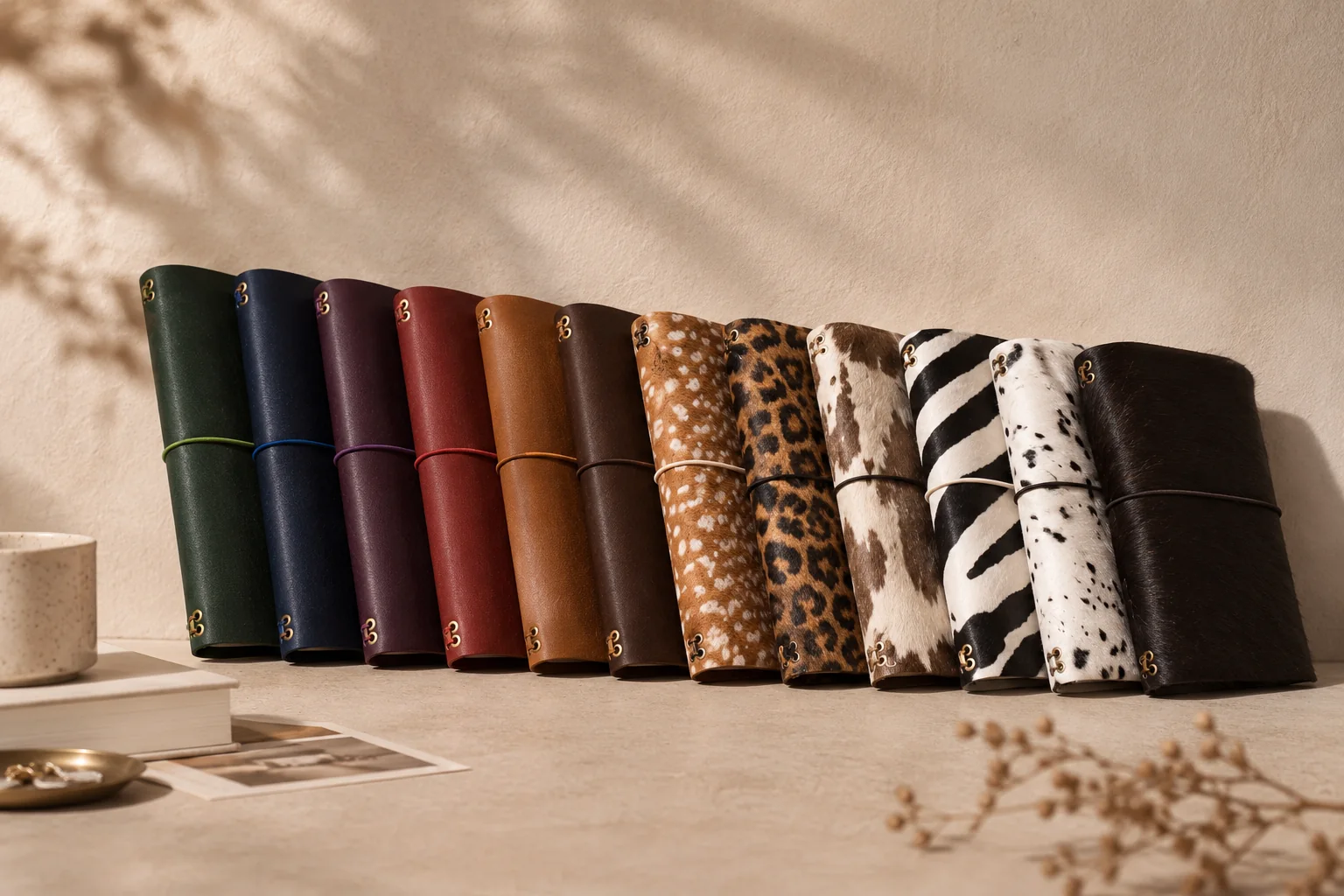
I founded Papuer and designed its identity, sourced surplus leather, developed and prototyped the journals, photographed the products, and built the Shopify storefront.
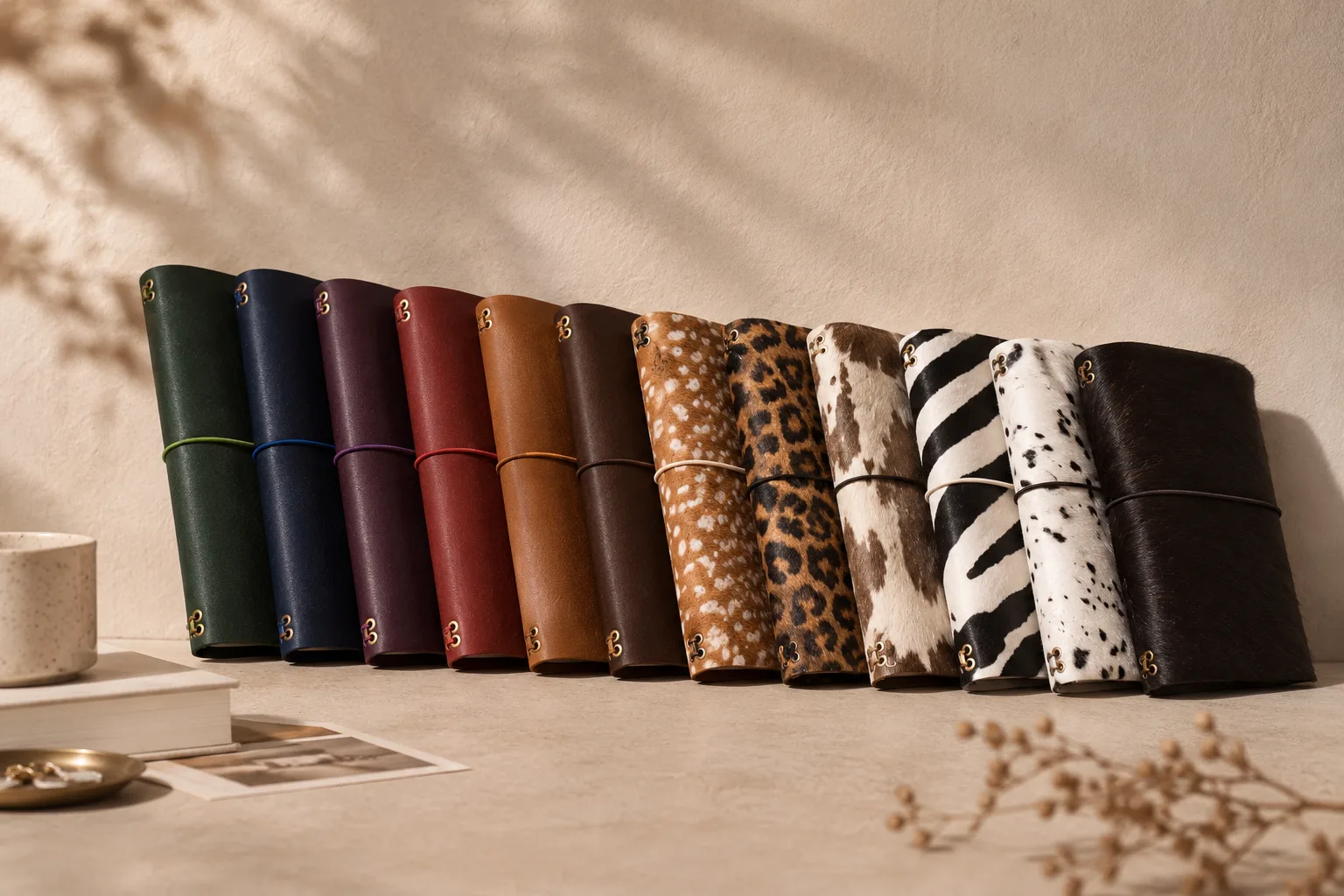
Beautiful materials deserve a second life.
Papuer is an independent stationery brand transforming surplus leather into thoughtfully designed, customizable journals. I developed the project across brand identity, material sourcing, physical product development, visual direction, and e-commerce, connecting craftsmanship with a personalized customer experience.
- My role
- Founder & Multidisciplinary Designer
- Storefront
- papuer.ca ↗
02Brand identity
Warmth, craft and thoughtful simplicity.
The identity draws on warmth, craftsmanship and thoughtful simplicity. A refined serif wordmark is paired with an organic, leaf-inspired monogram, and the palette follows the tones of natural leather.
Typography
Aa Aa
Wordmark
Refined serif
Supporting type
Clean sans-serif
Hierarchy
Contrast in scale and weight
- Espresso#3B2417
- Chestnut#7B3F2F
- Caramel#B8743A
- Blush Beige#F3E6DF
- Warm Sand#E5D6C6
- Forest#2F3F2E
The leaf-inspired monogram gives the identity an organic character; warm leather tones and refined serif typography connect its positioning to craftsmanship and thoughtful simplicity.
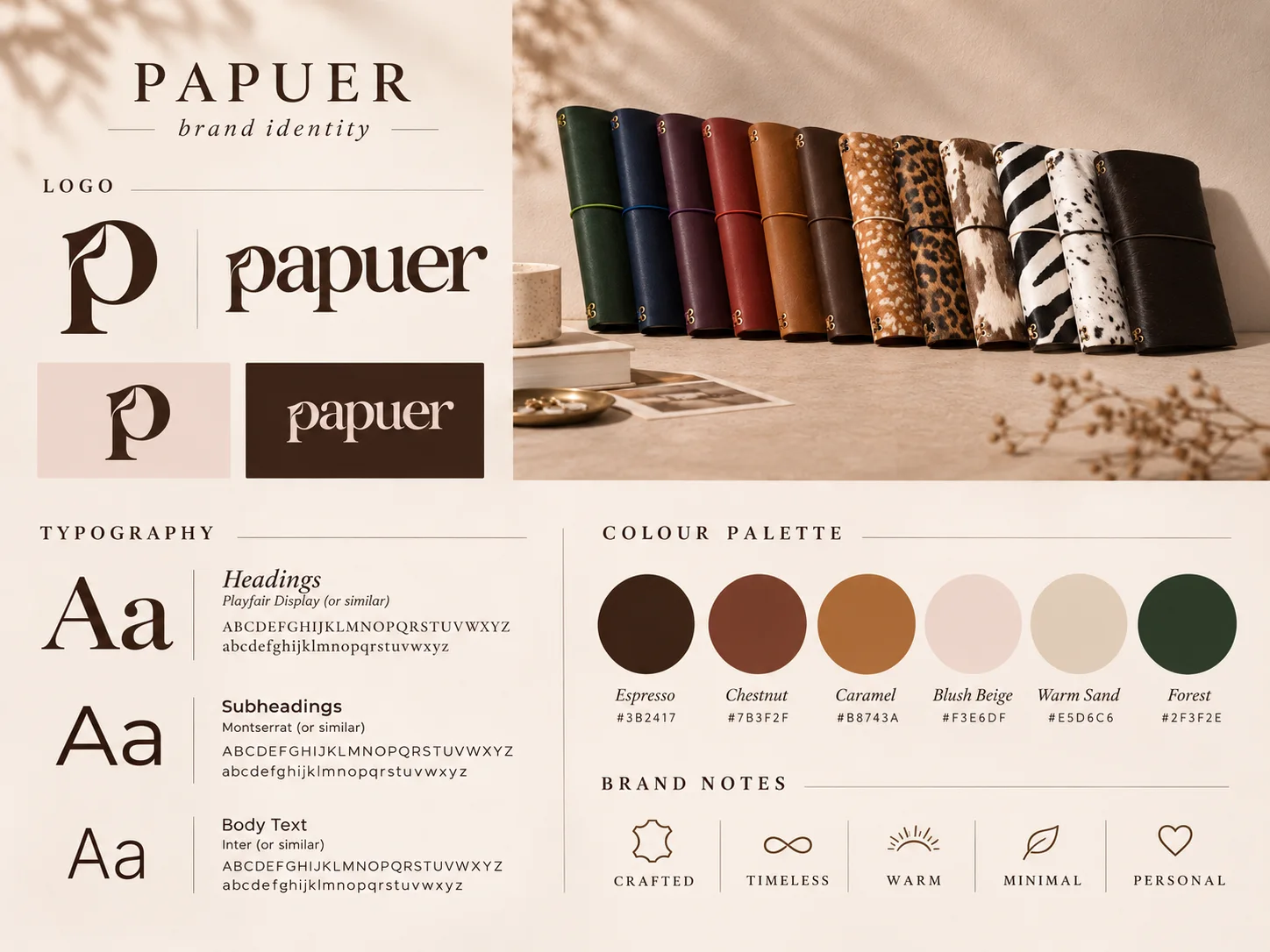
Brand board — logo, typography, palette, brand notes
03Material exploration
From overlooked materials to lasting objects.
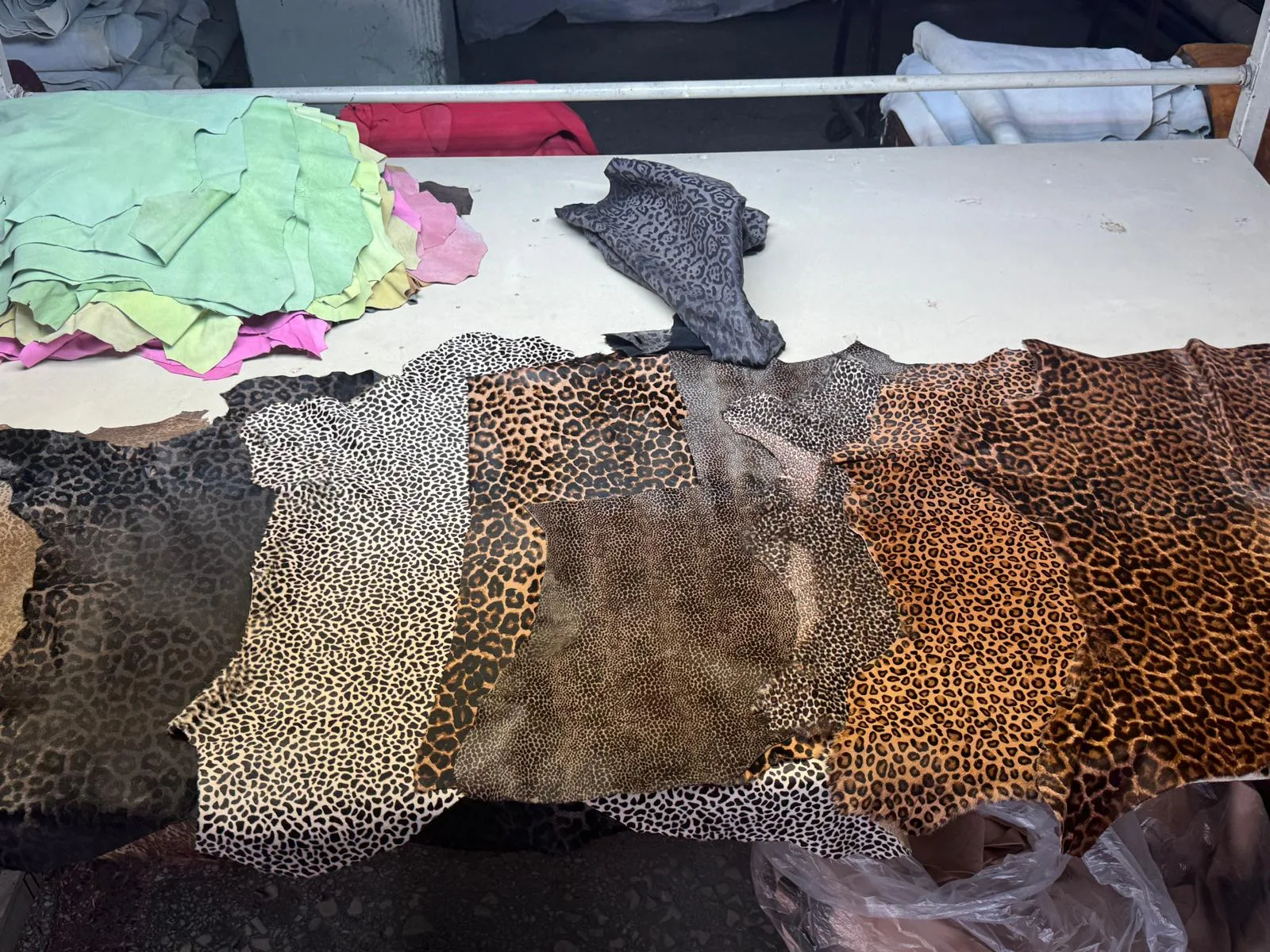
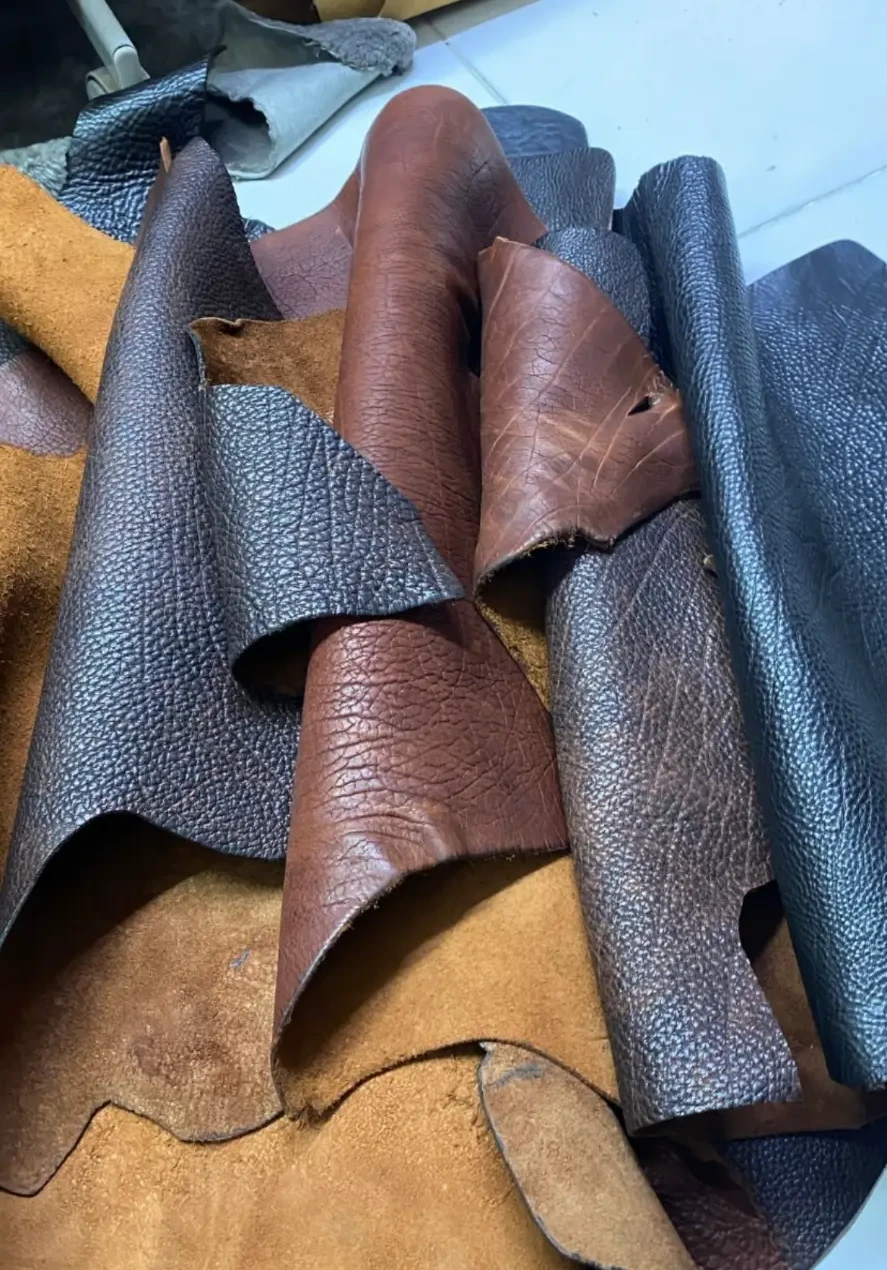
Each collection began with the material itself. The dimensions, textures, colours and natural variations of every surplus piece shaped how the A5 and A6 journals were designed — cover proportions, panel layouts and material pairings followed what the leather offered.
Design decision
Material dimensions, textures, colours and natural variations decided which products could be made.
04Product design & personalization
One system, made personal.
The product system includes A5 and A6 journal covers, removable paper inserts, elastic closures and customizable charms.
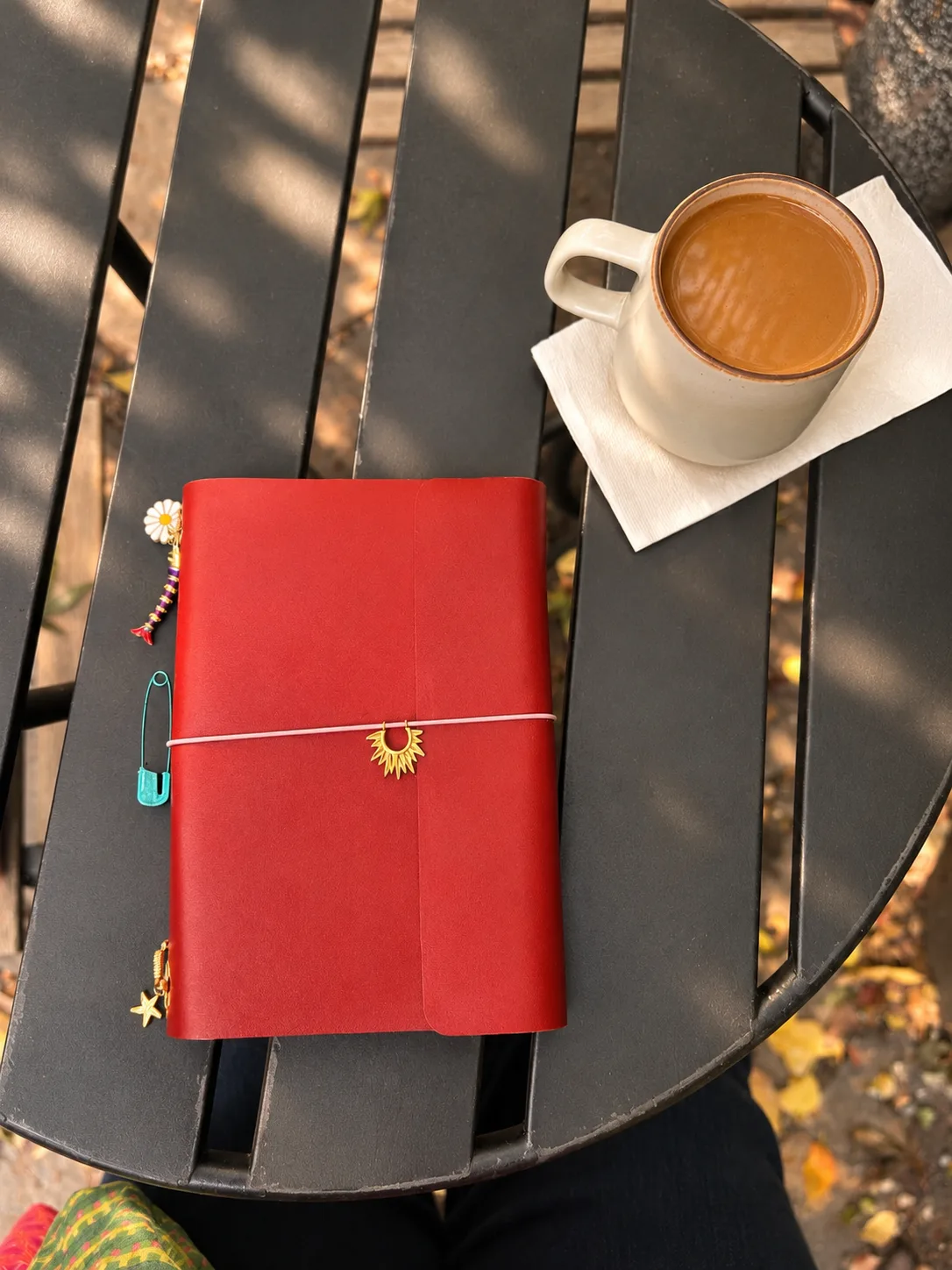
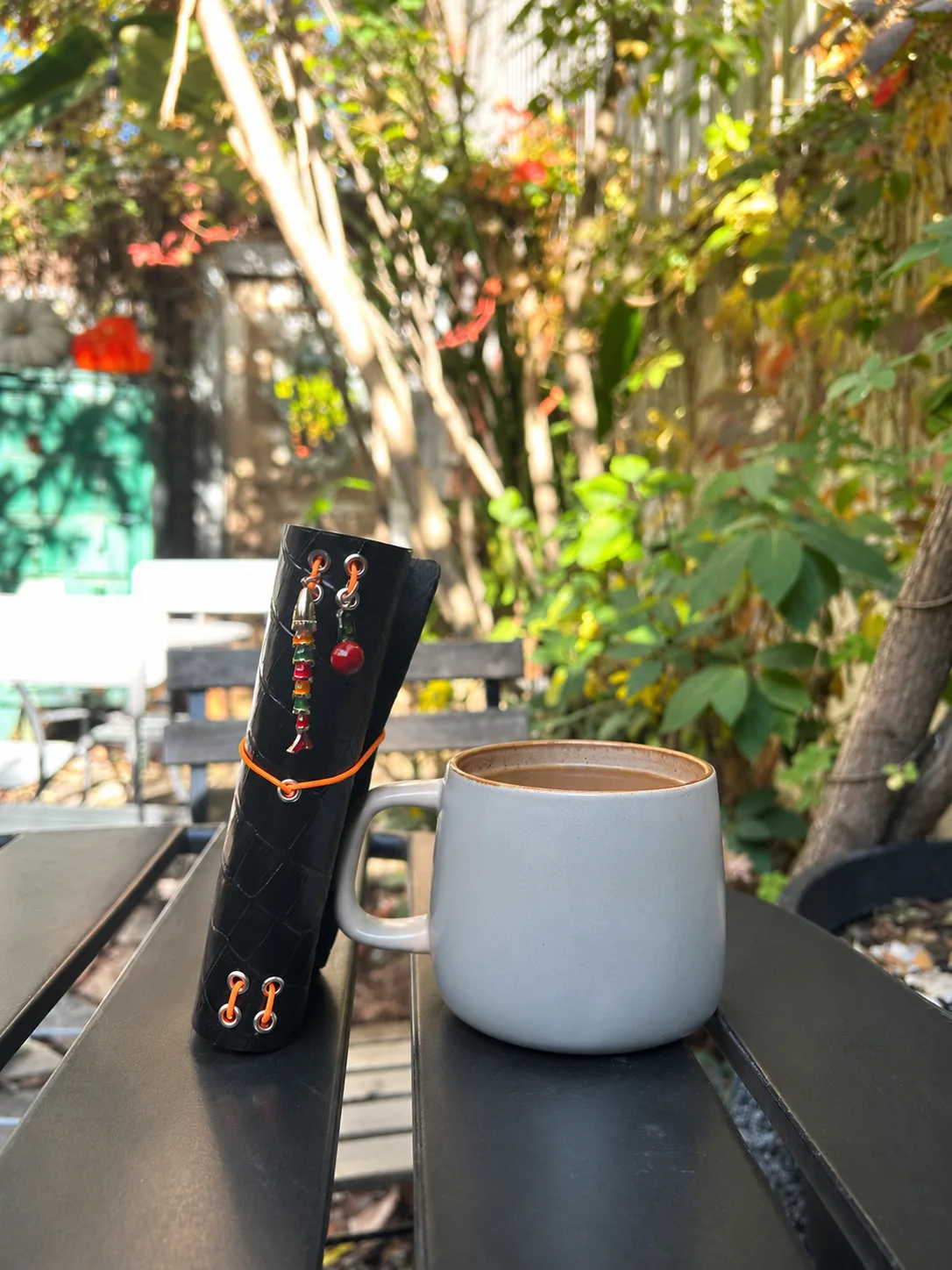
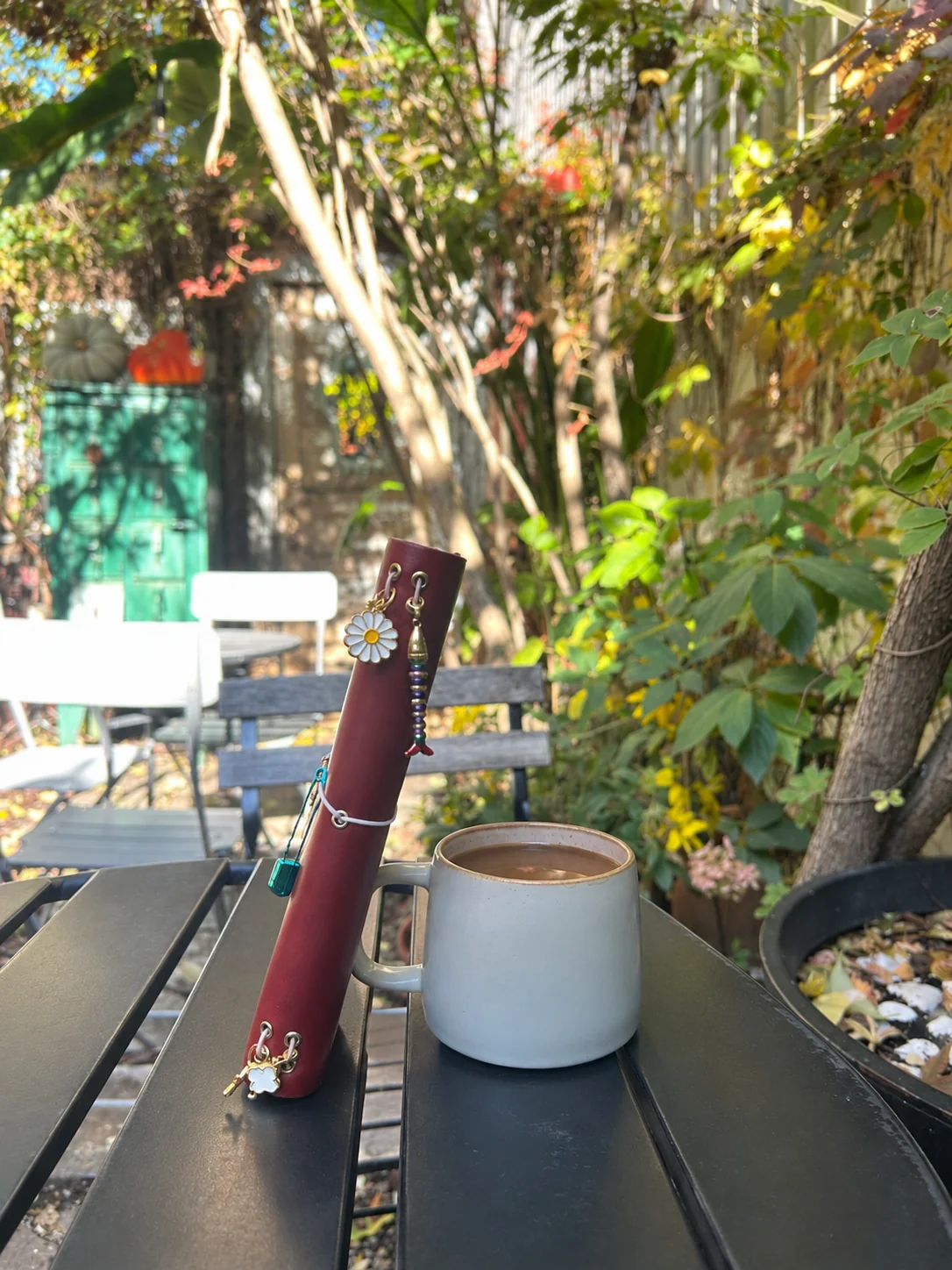
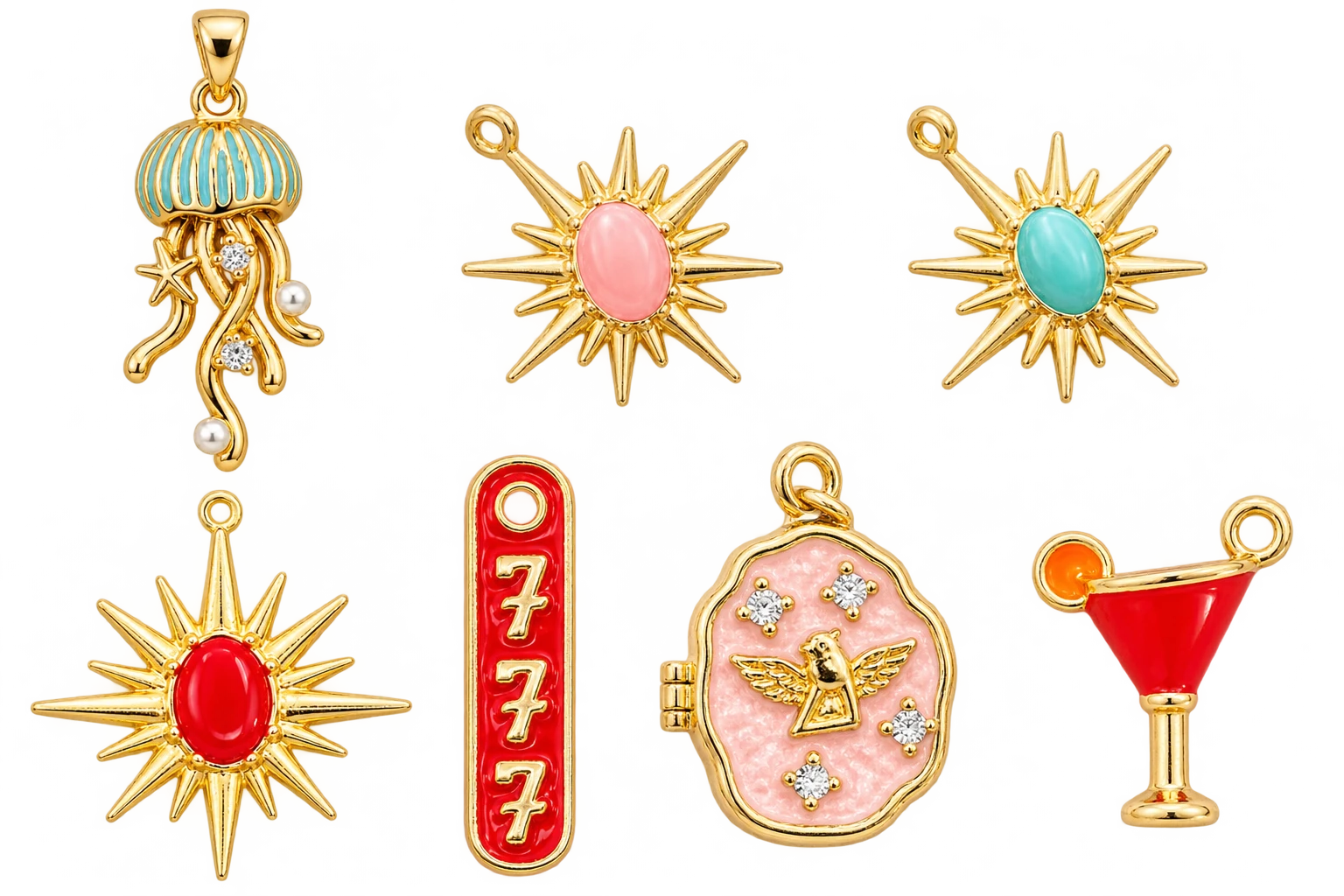
Interchangeable charms
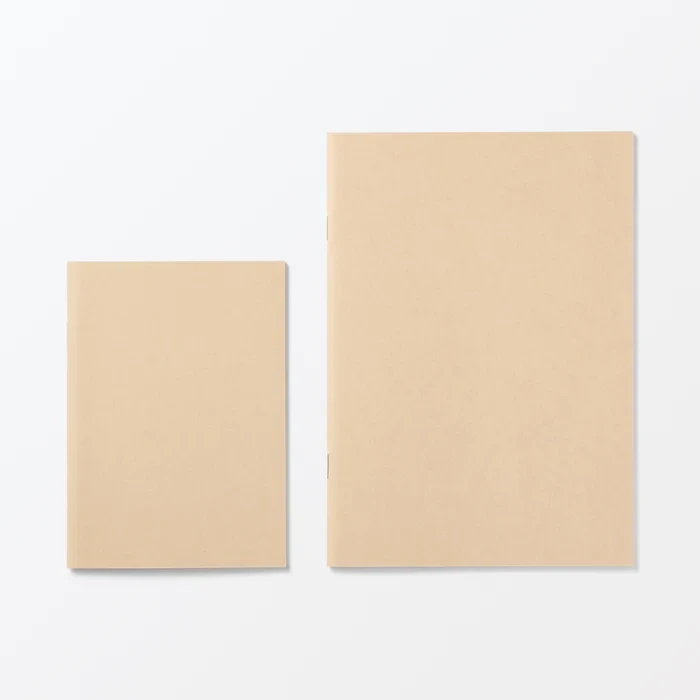
Removable notebook inserts
Variable surplus leather dimensions informed cover proportions and material selection: the available pieces, textures and natural variations shaped the A5 and A6 covers rather than a single fixed material specification.
- 01
Material flexibility
Covers adapt to the leather available, in A5 and A6 formats.
- 02
Product longevity
Removable paper inserts let one cover be refilled again and again.
- 03
Personalization
Elastic closures and charms let each customer make the journal their own.
05Design development
Working it out by hand.
Physical prototypes informed sizing, folded leather proportions, wraparound closures, hardware placement and construction. Material efficiency was considered during leather cutting and development.
Design decision
Two formats, different everyday needs.
The challenge
One size could not equally serve daily notebook carrying and a larger cover for notebooks and a compatible book. Both formats needed to remain portable, practical and easy to refill.
My approach
I developed two formats for distinct everyday routines, sharing the same product identity and refillable construction approach.
A6 — Everyday carry
A compact format for daily journaling and convenient carrying, prioritizing portability and everyday use.
A5 — Versatile carry
More space for notebooks and potentially a compatible book. Book fit depends on its dimensions and thickness; not every A5-sized book will fit.
Both prototypes shown below are the same size. They demonstrate folded leather, cover proportions and closures—not an A5–A6 size comparison.
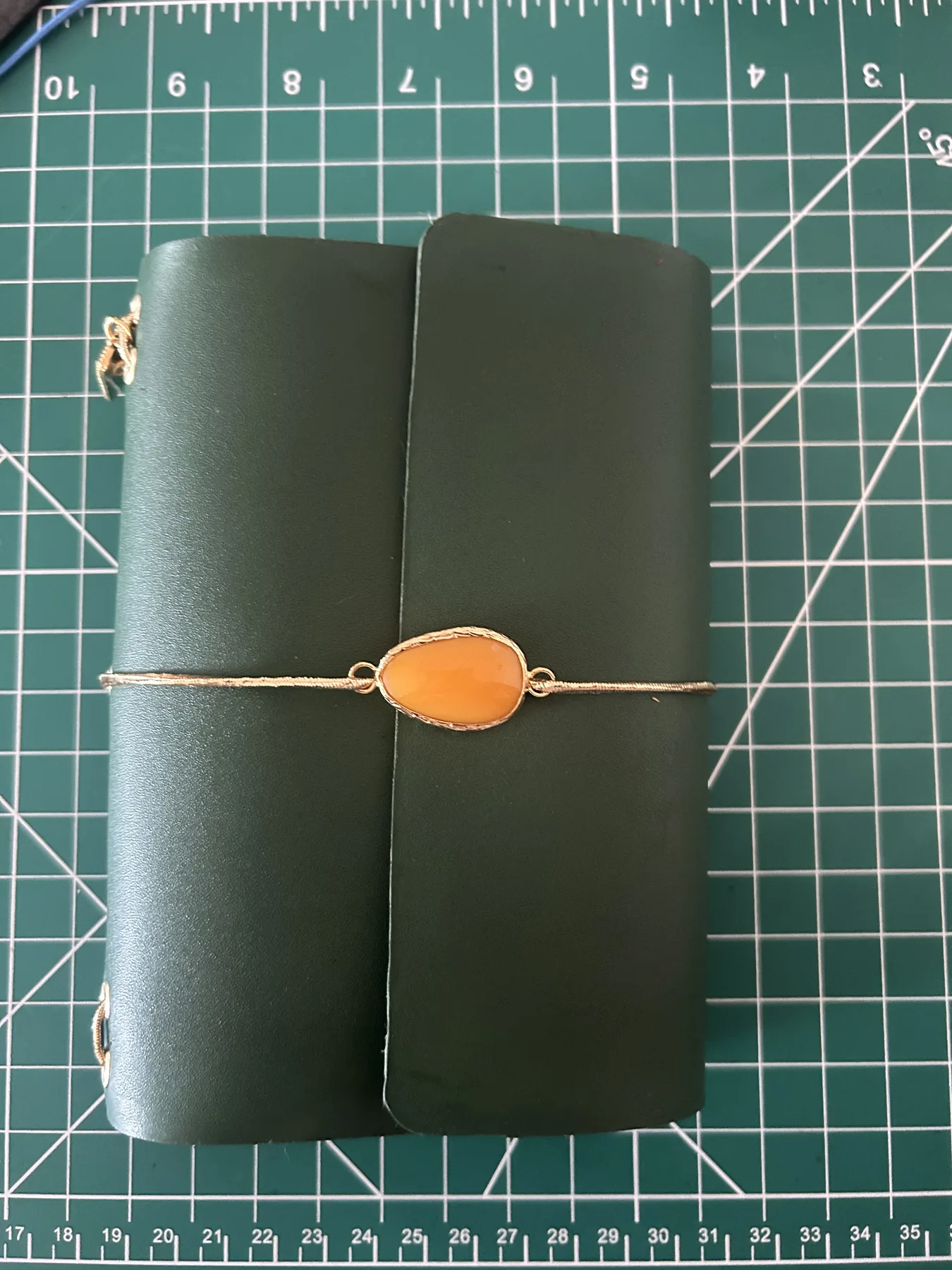
Prototype — green leather
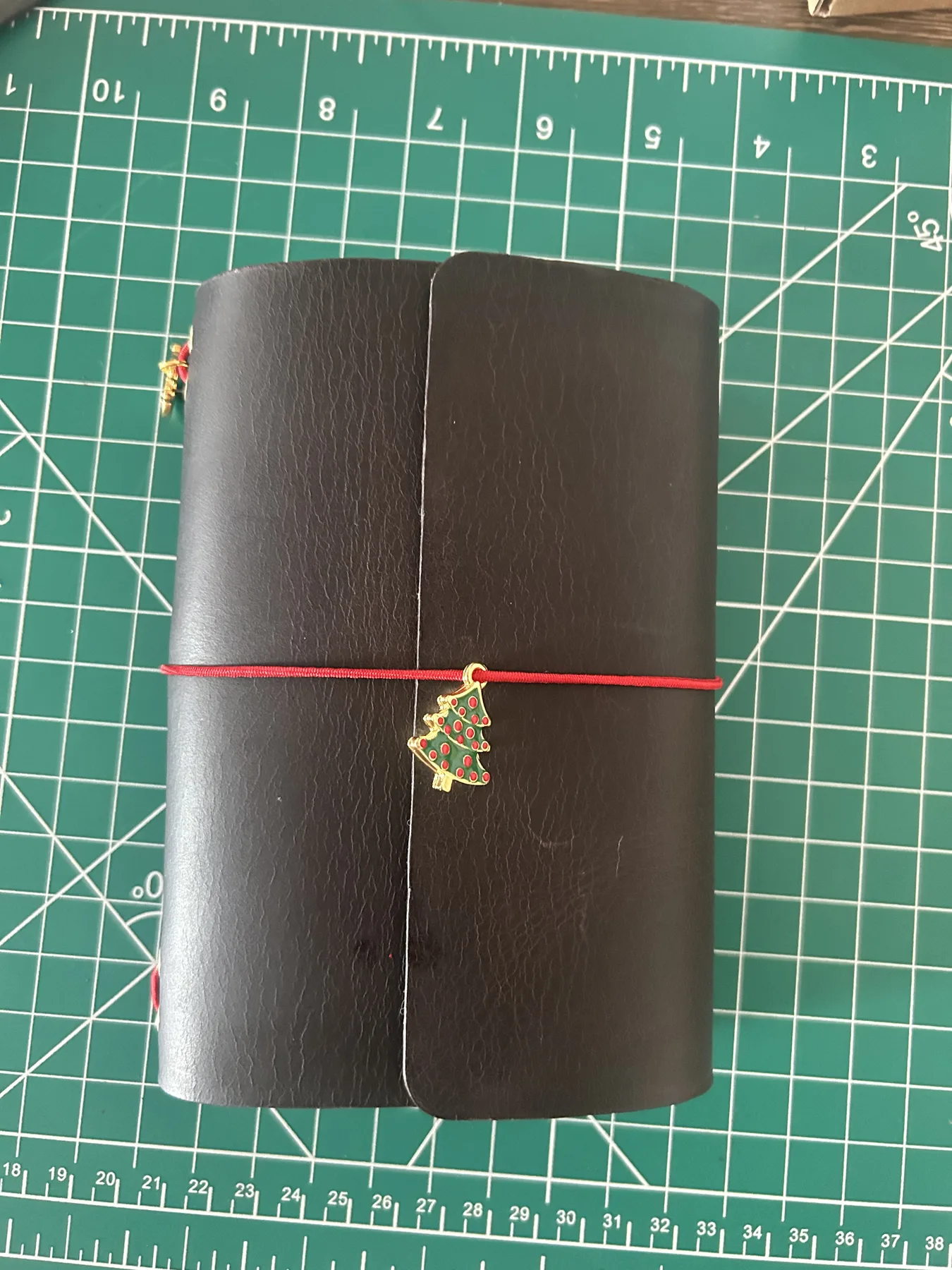
Prototype — brown leather
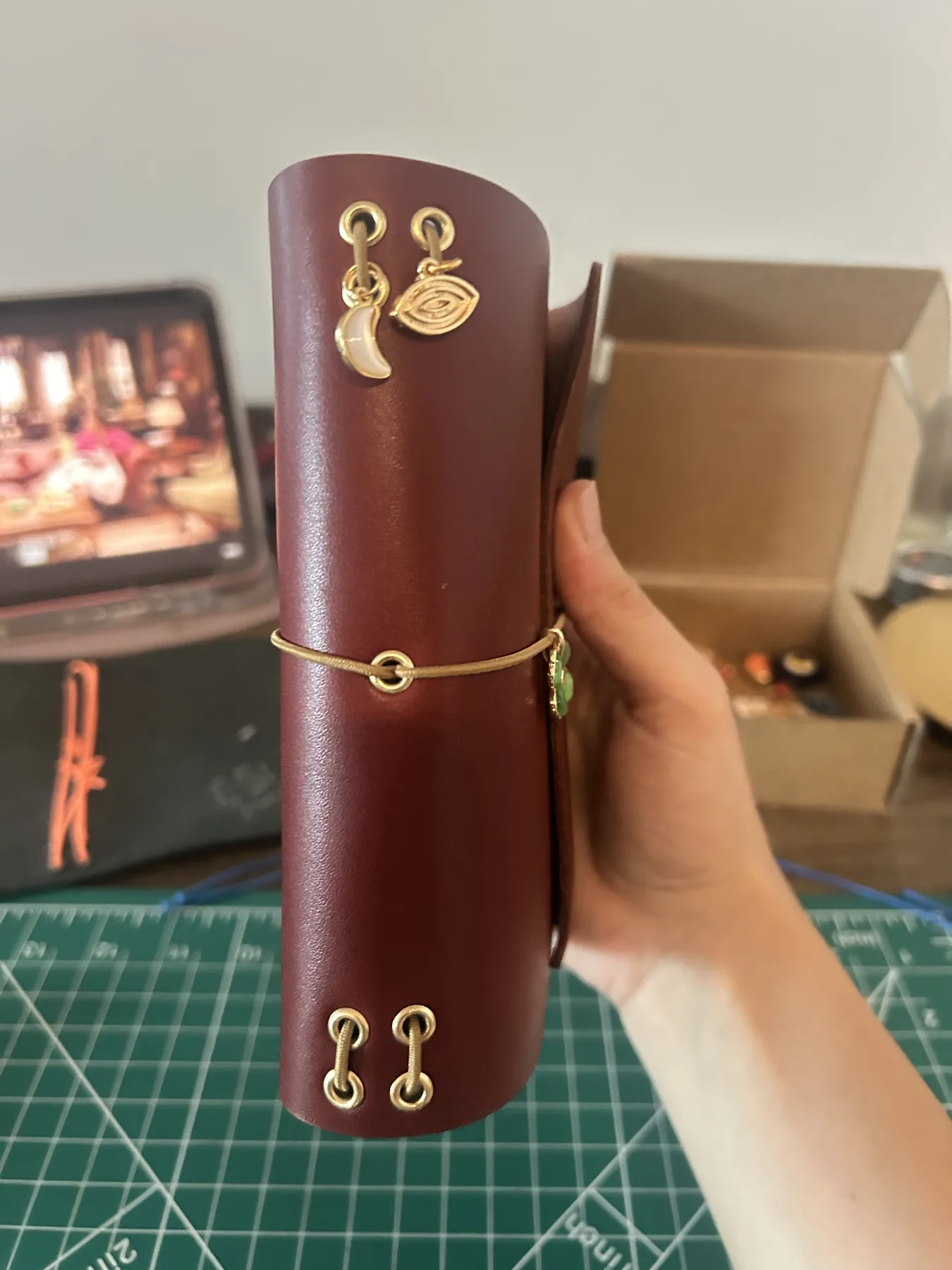
Construction details
Refill compatibility
I prioritized widely available A5 and A6 notebook formats rather than proprietary dimensions, so customers could replace inserts without depending exclusively on Papuer.
Construction considerations
Design development considered cover dimensions, internal capacity, notebook fit and how inserts could be added or removed. The photographs document folded covers, closures and hardware; the two insert formats are shown in the product section above.
The design rationale
Two sizes support different reading and writing routines while retaining a consistent identity and refillable construction.
The folded cover, elastic closure and eyelet placement were explored together, connecting the journal's construction to interchangeable charms and personalization.
06Design decision
Rethinking materials & production.
The challenge
Creating a premium, customizable leather journal while keeping production costs sustainable for a small independent brand.
My approach
Rather than compromising on material quality, I reconsidered how materials were sourced and produced.
Surplus leather sourcing
High-quality genuine leather offcuts and surplus pieces from suppliers in Italy and Turkey — irregular shapes unsuited to larger leather goods, but ideal for Papuer's compact A5 and A6 formats.
Custom insert production
Ready-made notebook inserts were replaced with custom-produced inserts, developed with a printing partner for a more cost-efficient production process.
The outcome
40%
Reduction in unit production costs
By optimizing material sourcing and custom notebook production, I reduced the total cost per journal by 40%, including labour, while maintaining material quality and the intended premium product experience.
07Digital experience
Making personalization intuitive.
Build Your Journal
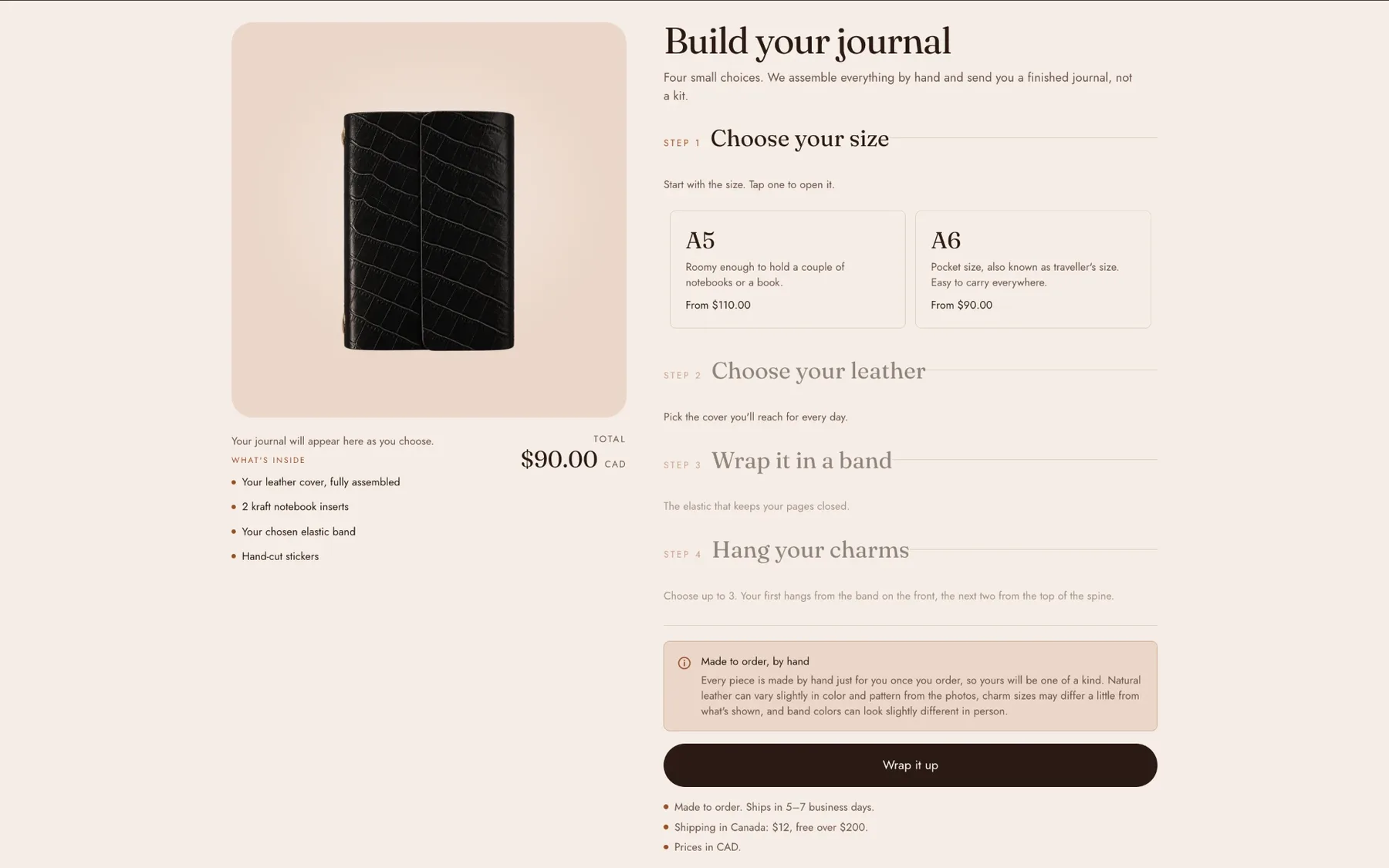
To translate a customizable physical product into an intuitive shopping experience, I organized the purchasing journey into four decisions: size, leather, elastic band, and charms. The interface keeps product information and personalization options connected, helping customers understand what they are creating.
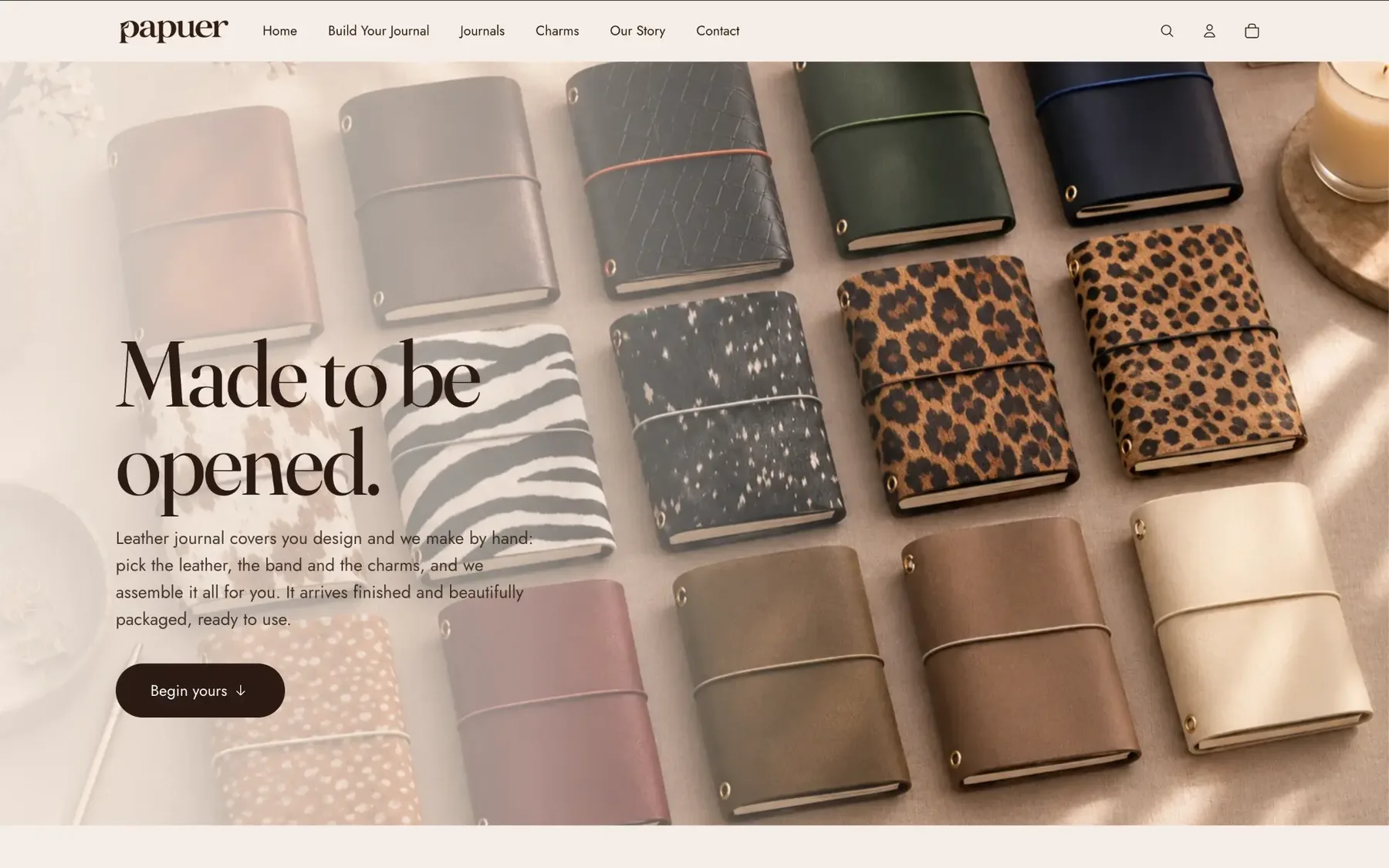
Storefront homepage
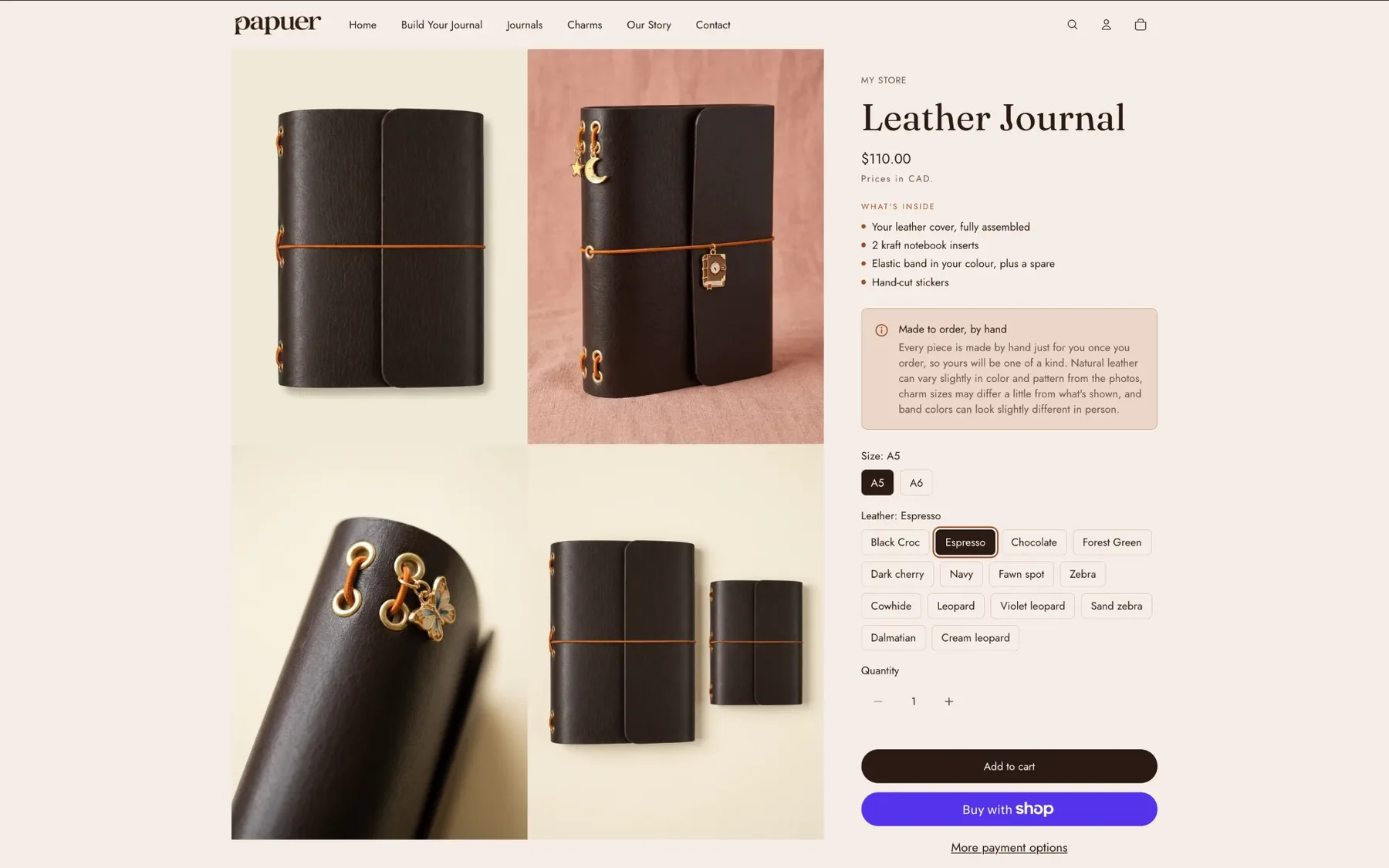
- 01Choose a journal size.
- 02Select leather.
- 03Choose an elastic band.
- 04Select decorative charms.
Each choice online maps directly to a component of the physical journal, so the customer's selections become an individually assembled product.
Visit the live brand — papuer.ca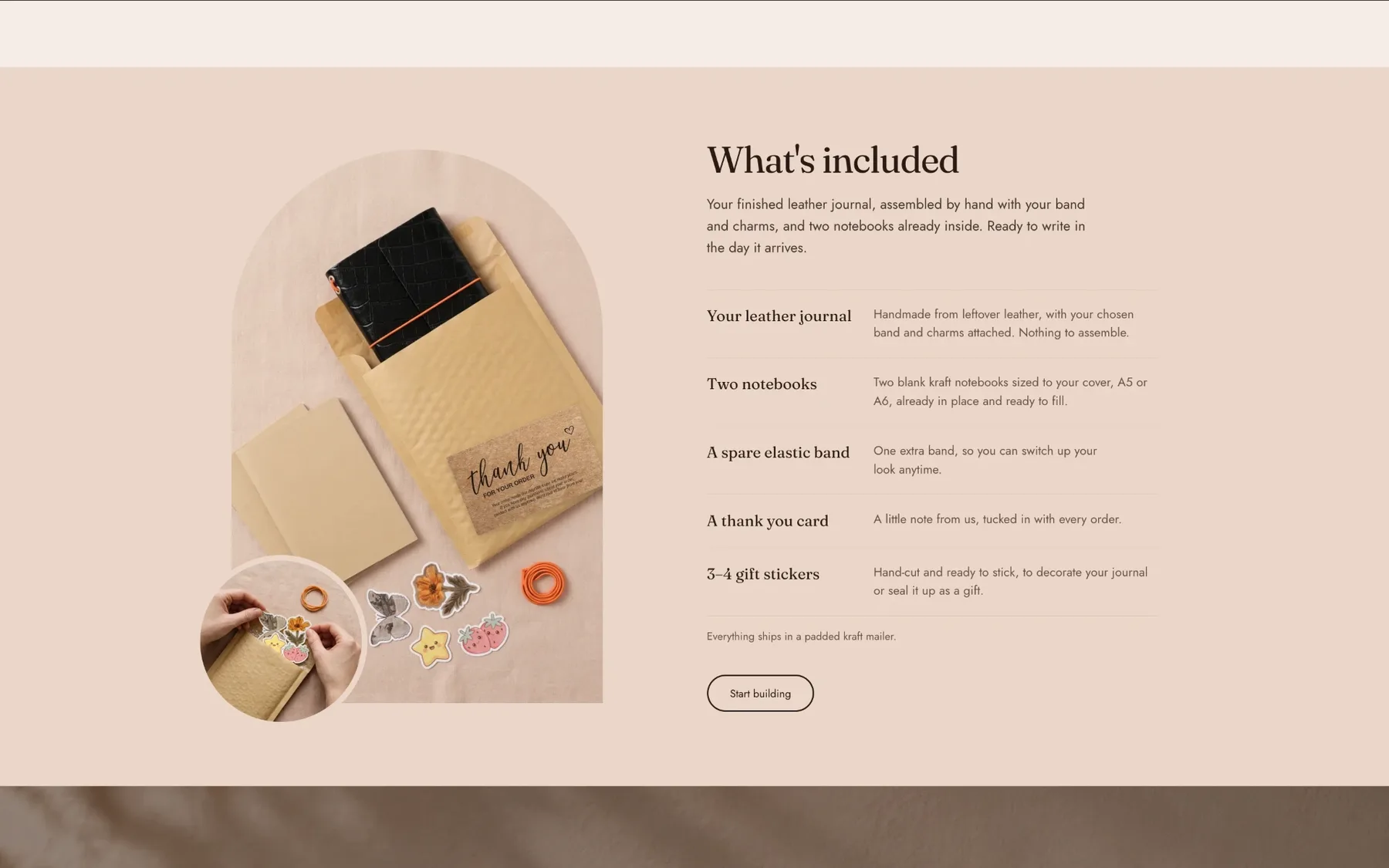
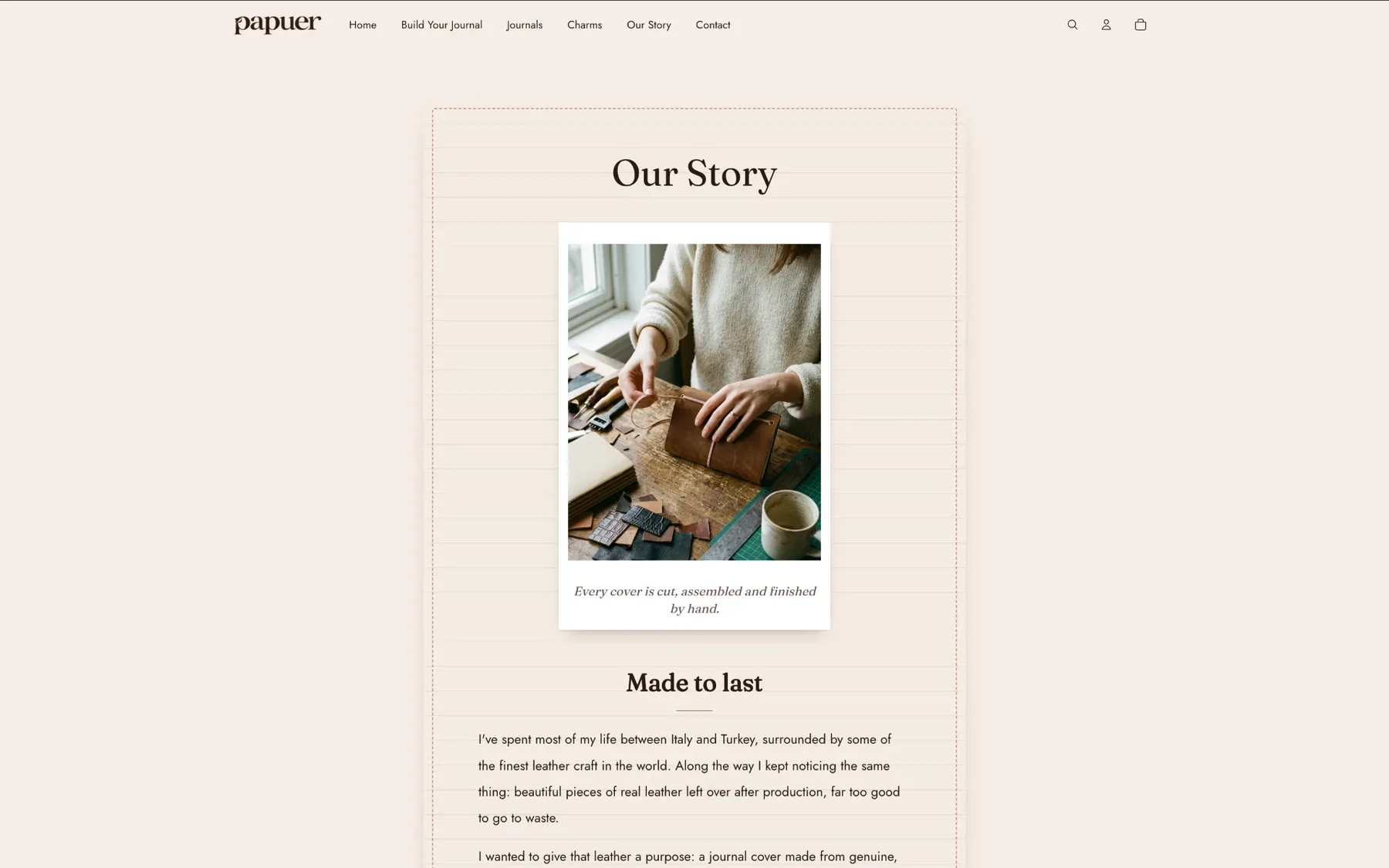
08Packaging & brand applications
The unboxing as part of the brand.
Packaging direction considers how the identity could carry through the unboxing experience and supporting brand touchpoints. Photography of the packaging is forthcoming.
Design Decisions
Why it looks this way.
- 01
Material led the form
Surplus leather arrives in varying shapes, sizes, textures and conditions, so each piece was assessed before choosing it for a cover and developing the cover proportions around it.
- 02
Two formats, interchangeable parts
The collection was developed in A5 and A6 journal formats, with customizable components — leather, elastic band and charms — that can be combined per order.
- 03
Four decisions online
The Shopify customization was organized into four customer decisions: size, leather, elastic band and charms, keeping each choice connected to the product being assembled.
09Outcome & reflection
From an idea to an independent brand.
Developed Papuer from an independent product and brand concept into a functioning direct-to-consumer business, bringing together product development, brand identity, packaging, photography, e-commerce, and marketing. The brand has launched and generated its first sales.